


The electricity market is no longer what it was five years ago. Price volatility, curtailment, grid congestion and the growing penetration of renewables are reshaping the landscape.
Today, simply generating energy is not enough. Renewable assets must be more flexible, more intelligent and more strategic. In this context, PV + BESS hybridisation is becoming a core strategy for developers and investors seeking to future-proof their assets.
By integrating battery energy storage within a solar plant, hybrid solar projects evolve into dynamic assets capable of optimising revenue, managing risk and maximising grid connection capacity.
At its core, PV + BESS hybridisation combines solar generation and storage behind a single connection point, creating a fully integrated hybrid solar system. In markets where network capacity constraints limit new developments, making better use of existing grid infrastructure through hybridisation is becoming increasingly important.
The objective is clear: extract more value from limited grid capacity through intelligent hybrid solar and storage integration.
Why Hybridise Now?
The growth of hybrid solar and storage projects is being driven by structural changes in electricity markets. By incorporating battery storage into a hybrid solar system, developers can:
- Maximise the use of available grid connection capacity and export limits;
- Reduce exposure to negative pricing and solar cannibalisation;
- Mitigate curtailment risk;
- Access additional revenue streams through flexible dispatch;
- Enhance long-term financial stability.
For both new hybrid renewable developments and operating solar assets, PV + BESS hybridisation can improve energy management and strengthen revenue resilience.
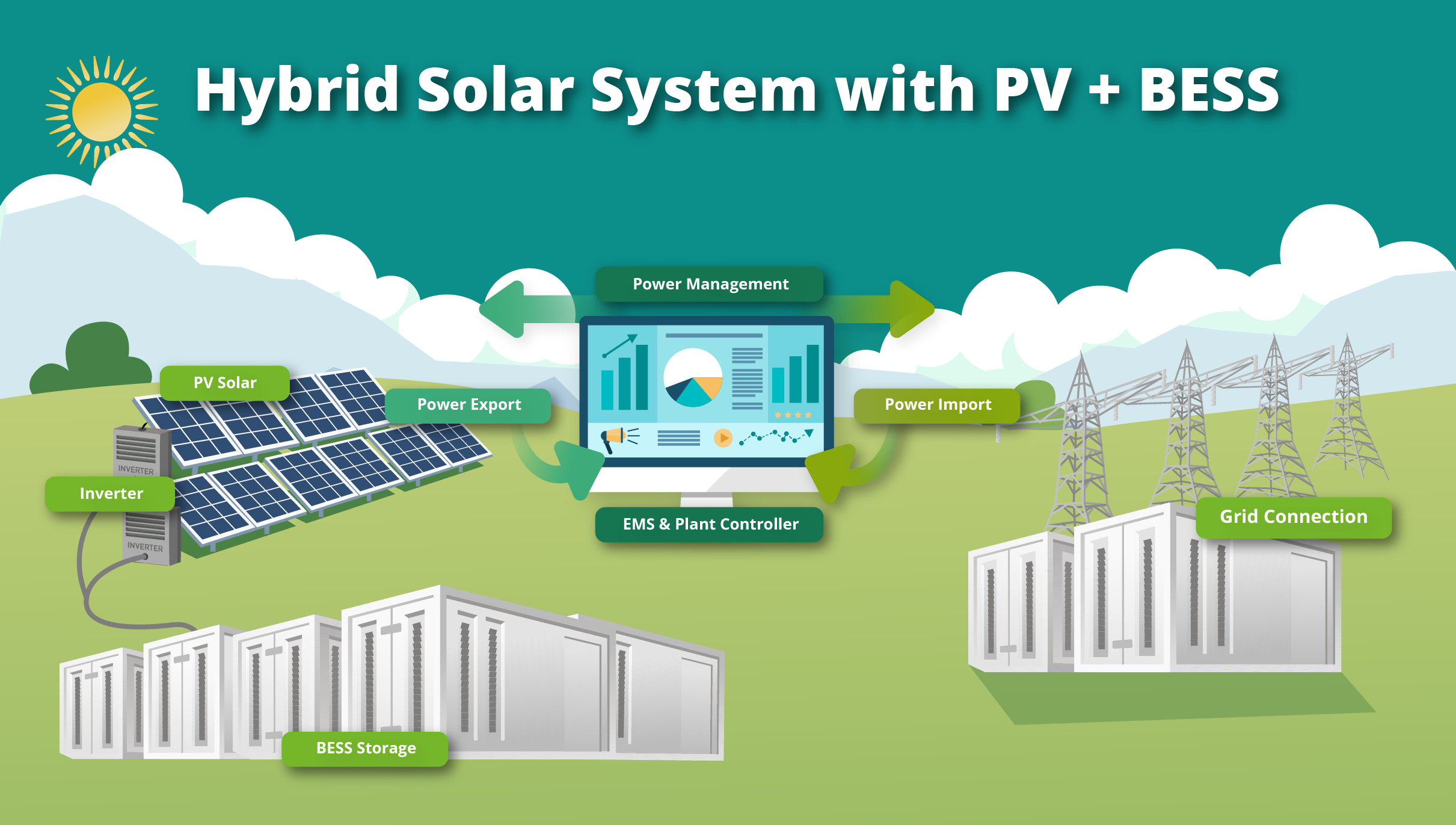
Moreover, by sharing infrastructure such as substations and connection points, hybridisation reduces the need for new network developments and concentrates impact within existing sites — an advantage from both environmental and regulatory perspectives.
For assets that have been operating for several years, hybridisation can also provide a strategic upgrade pathway. Combined with repowering initiatives, it can enhance site performance, extend operational life and adapt the project to evolving market conditions.
In markets increasingly saturated during solar generation hours, the ability to shift energy to higher-value periods is becoming an important part of maintaining asset competitiveness.
Beyond Simply Adding a Battery: Designing Hybridisation Properly
Effective PV + BESS hybridisation requires far more than installing a battery alongside PV modules. Designing a robust hybrid solar and storage configuration requires careful optimisation of:
- Battery sizing;
-
AC/DC architecture;
-
Charging and discharging strategy;
- Grid constraints;
- Lifecycle degradation;
- Integration with the EMS and plant controller;
- Alignment between technical design and financial model assumptions.
In hybrid renewable projects, technical and financial decisions are intrinsically linked. A technical approach that is not fully aligned with project realities can affect financial viability. Likewise, a financial model that does not accurately reflect technical limitations may lead to unrealistic revenue expectations.
Hybridisation therefore requires an integrated approach in which engineering, market strategy and financing are fully aligned.
From Optimisation to Investment Case: PV + BESS Hybridisation in Practice
The Challenge: Unlocking Value Within Existing Grid Capacity
The value of this integrated approach can be seen in a recent PV + BESS hybridisation study carried out by Quintas Advisory for an existing solar plant in Spain.
The client wanted to assess whether integrating battery storage could create additional value while operating within the project’s existing grid connection capacity and other applicable grid constraints. One of the key drivers was curtailment at the site, which was resulting in a loss of otherwise available PV generation.
Rather than simply determining whether a battery could be added to the existing asset, the objective was to identify the BESS configuration, connection approach and operating strategy capable of delivering the strongest investment case under realistic technical, grid and market constraints.
Finding the Optimal BESS Configuration With Paravane
Using Paravane, Quintas Advisory’s in-house simulation and optimisation tool for PV + BESS projects, we combined technical, market and regulatory analysis to evaluate multiple storage configurations and operating scenarios.
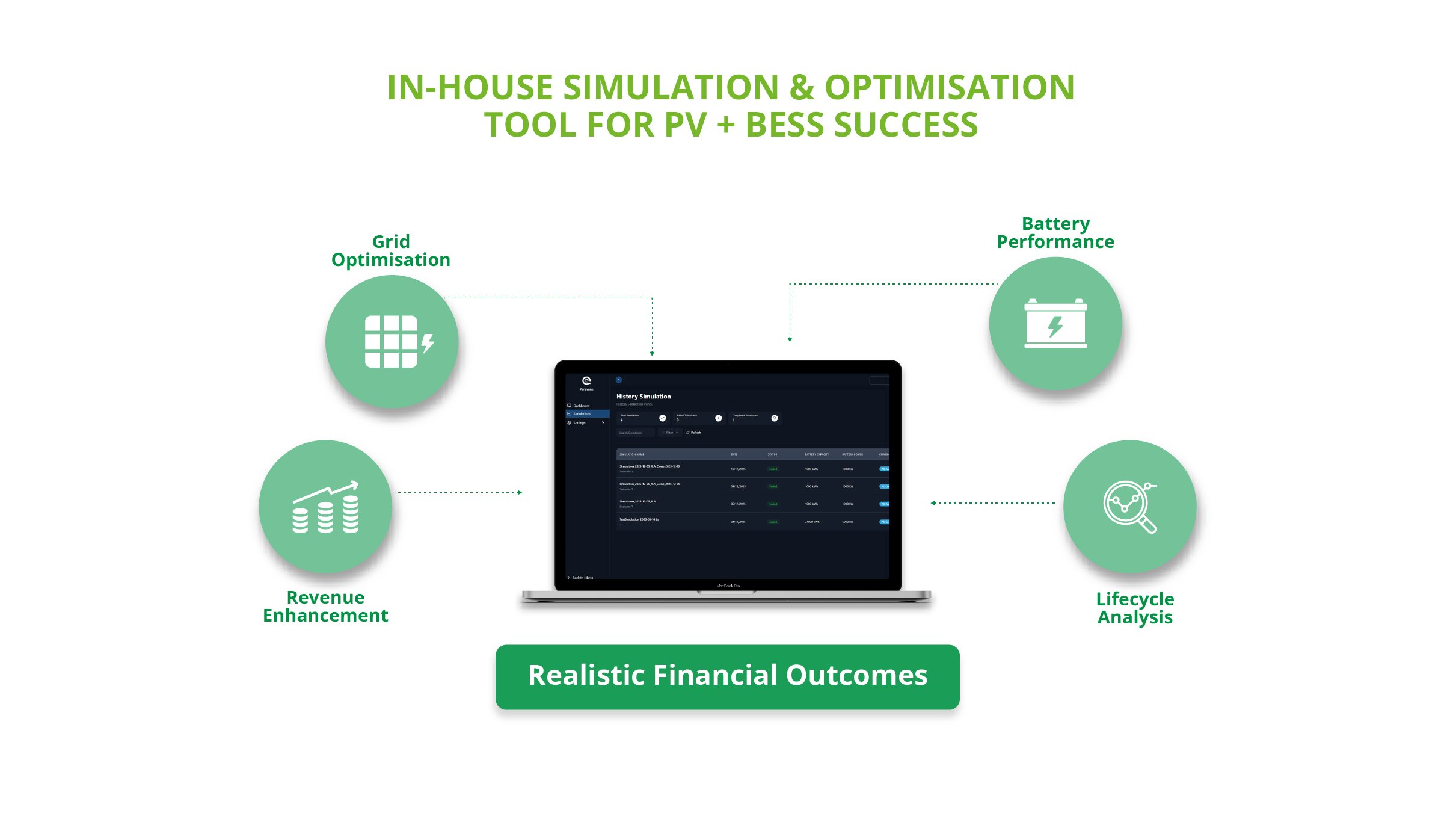
The study assessed BESS durations ranging from 2 to 6 hours across different power ratings and operating assumptions. Under the conditions and assumptions modelled, a 2-hour BESS emerged as the strongest-performing configuration, outperforming the longer-duration alternatives assessed.
But battery sizing was only part of the equation. We also assessed how the recovery of otherwise curtailed PV generation, additional market revenue opportunities, grid-import capability and alternative operating strategies could influence project economics. CAPEX and OPEX assumptions were stress-tested across a ±15% range to assess the sensitivity of the investment case to changes in project costs.
This allowed us to distinguish between factors that simply improved project returns and those capable of materially changing the commercial outcome.
Turning a Challenging Business Case Into a Viable Investment
The optimisation demonstrated how the right technical configuration and operating strategy can materially improve project economics. Across the scenarios analysed, the modelled IRR increased by more than 13 percentage points, moving the project from negative to positive returns.
Capturing energy that would otherwise have been curtailed was a key contributor to this improvement. Grid-import capability provided further upside by increasing BESS operational flexibility and enabling additional charging and market strategies. For the same 2-hour configuration, allowing grid imports reduced the modelled payback period by three years.
The assessment therefore went beyond identifying the optimal battery size and duration. It showed how BESS configuration, operating strategy and grid-access conditions interact to determine the technical and commercial viability of the hybrid asset.
In parallel, the study assessed the most suitable electrical connection architecture for integrating the BESS with the existing PV plant, comparing alternative arrangements in terms of electrical requirements, permitting, implementation timescales, CAPEX and project risk.
Combining the technical and optimisation assessments gave the client a quantified view of the conditions required to support a viable investment case, as well as the key connection, permitting and implementation considerations affecting project delivery.
Ultimately, the case demonstrates that successful PV + BESS hybridisation depends on more than battery sizing. Grid constraints, connection architecture, curtailment, import and export capabilities, operating strategy, market revenues and permitting all play a role in determining whether a technically feasible project can become a commercially attractive and deliverable project.
Optimising Hybrid Projects Over the Long Term
Hybridisation is not merely a technical solution. It is a strategic investment and operational decision, directly influencing:
- The project’s risk profile;
- Revenue resilience and predictability;
- How the asset is perceived by investors and lenders.
Integrating storage into an existing solar PV plant can transform the operational capabilities of the asset, providing greater flexibility to manage generation, respond to grid constraints and participate in evolving electricity markets.
With more than 17 years of experience in renewable asset management, Quintas Advisory supports developers, investors and asset owners throughout the hybrid project lifecycle — from feasibility assessment and technical configuration to implementation support and long-term operational optimisation.
In today’s electricity market, flexibility is not optional. It is part of the asset’s value.
Could PV + BESS hybridisation improve the business case for your renewable asset?
From identifying the right BESS configuration to assessing grid constraints, operating strategies and financial viability, Quintas Advisory helps you evaluate the opportunities and risks before committing to an investment. Discuss your hybridisation project with our team!
